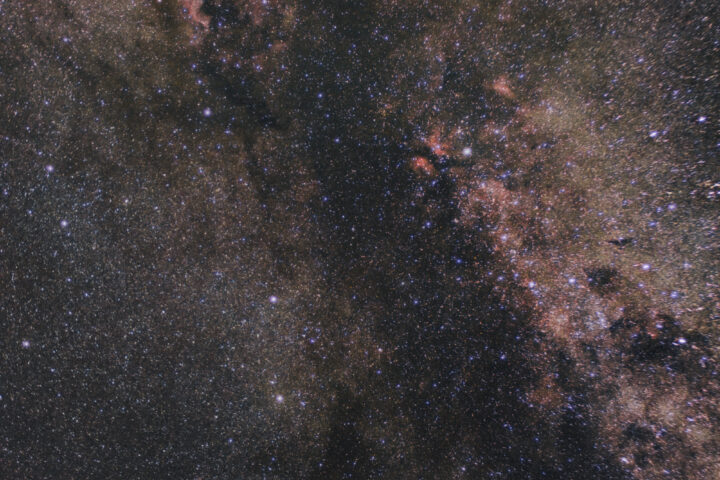
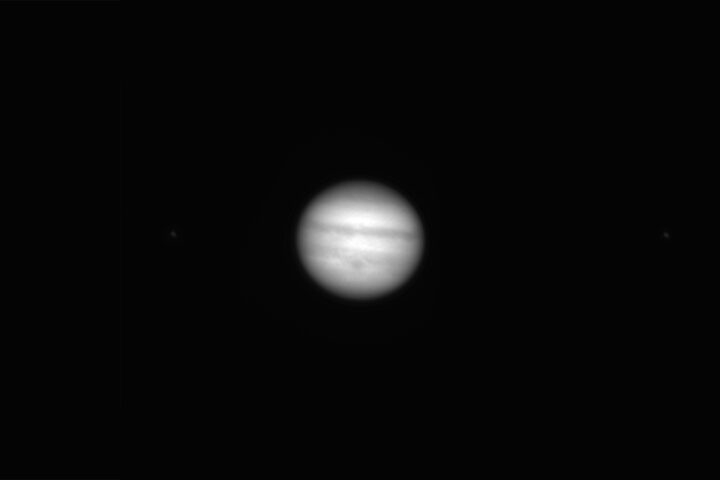
Oh, so many things have changed since I arrived at Stanford. I feel like I’ve lived 10 years’ worth of experiences in just one, and every day my mind continues to be blown. However, this also means that apart from a couple of comet photos, I haven’t had too much time for astrophotography. Keep in mind that all my astro equipment is still in Italy, so I can’t just decide I’m going to take an astrophoto any night. Or can I?
Stanford Astronomical Society
Stanford has a student-run Astronomical Society, which recently acquired an ASI2600MC Air and a duo-narrowband filter. Very convenient. Turns out they also have a Sirius EQ-G and a Takahashi TSA-102 refractor telescope lying around. So this summer, after a quick chat with the club president, I built an absolute BEAST of an astrophotography setup!

It’s hard to express how incredibly excited I am about the setup. It’s a huge upgrade from the stock mirrorless with frankensteined computer control on an overloaded EQ3 I’m running at home. Don’t get me wrong, I love my setup, and it has definitely taught me a lot. Still, it’s convenient to have a single device integrating computer, imaging camera, and guide camera, riding on a much more capable mount.
But how does it perform?
First Light: Crescent Nebula
This was my first night with a dedicated astro camera, first narrowband shots, and definitely my first time with a premium OTA like the Takahashi. I had built up high expectations for the image quality and…

This is (unsurprisingly) the best image I’ve taken to date. The “brain” of the crescent nebula is clearly visible, and you can even spot a faint O-III blue cloud around it. What is surprising is that, due to clouds, this photo contains only 20 minutes of integration.
Unbelievable. If this is 20 minutes, I can’t even imagine what’s possible with a whole clear night! And processing was so easy with data of this quality.
Conclusion
I still can’t believe this gear is actually here for me to use. The experience is so smooth, maybe even a little too smooth. I think there is value in struggling to make the most of your equipment. Seeing where things fail lets you peek into their inner workings, and finding workarounds is a great mental exercise. Still, can’t wait to image some more advanced targets!
I hope you enjoyed reading the article. Dream on, and clear skies!